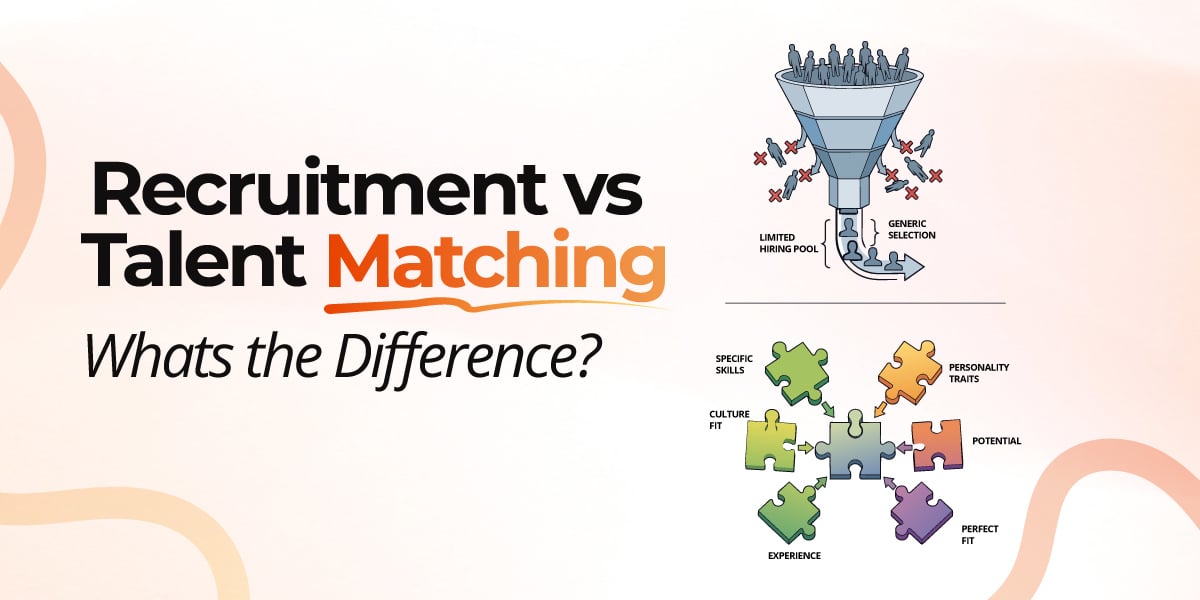
Walk into any boardroom or HR office today, and you will hear a familiar refrain: “We have hundreds of applicants, but we still can’t find the right person.”
Across East Africa and the global talent landscape, organisations are operating in an environment marked by rapid technological evolution, shifting skill requirements, and heightened competition for specialized capabilities. Yet, despite having more access to job seekers than ever before, CEOs, founders, and HR leaders consistently find themselves caught in a cycle of early turnover, disengagement, and repeated hiring efforts.
In this environment, hiring success is no longer measured by how quickly a role is filled. It is measured by whether the person hired succeeds, stays, and contributes to business growth. This is where the distinction between recruitment and talent matching becomes important.
Recruitment primarily focuses on filling an open position, while talent matching focuses on aligning the right person with the right role, organisation and timing. Talent matching considers factors such as skills, readiness, motivation, aspirations and behavioural capabilities alongside qualifications and experience.
Table of Contents
Why Traditional Recruitment Is No Longer Fit for Purpose
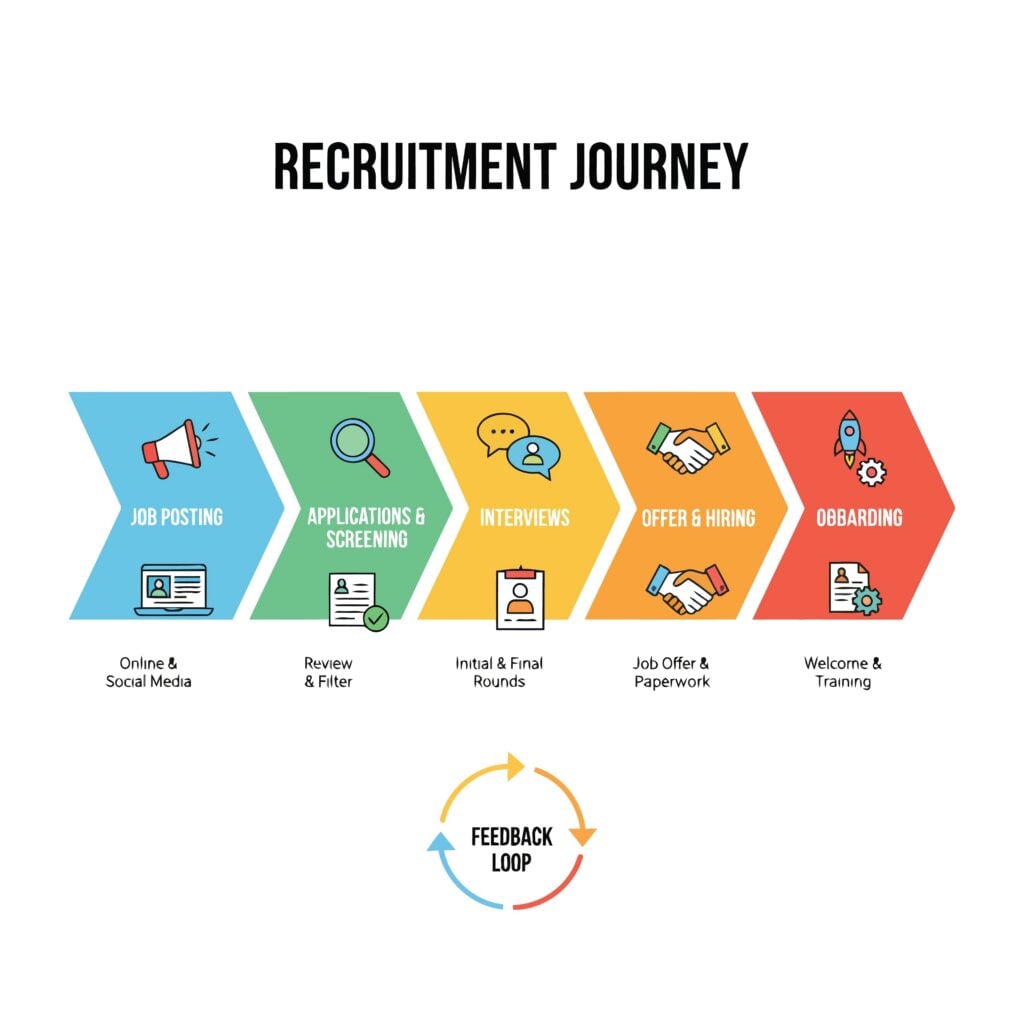
Traditional recruitment follows a relatively linear process:
Workforce need identified → Job description created → Vacancy advertised → Applications received → CV screening → Interviews → Assessments & reference checks → Offer & onboarding
The process is familiar, structured, and easy to manage. It provides measurable milestones such as time-to-fill, cost-per-hire, and vacancies closed. The question driving the entire process is: “Can this person do the job?”
Across East Africa and globally, there is no shortage of people looking for work. The real scarcity is quality of match: the right person, in the right role, in the right environment, at the right time. Traditional recruitment was never designed to solve that problem.
What is Talent Matching?

Talent matching is an approach to hiring that evaluates how well a candidate’s skills, readiness, motivations, aspirations and behavioural capabilities align with an employer’s needs, role, and working environment. It’s about making sure the right person lands in the right job, someone who will thrive in it, stay, and actually move the business forward. It goes beyond qualifications and experience to weigh Employer ICPs, Talent ICPs, behavioural capabilities, motivation, career aspirations, readiness, and the environment the person will actually be performing in.
Talent matching asks:
“Is this the right person for this specific role, in this specific organisation, at this point in time, and are they likely to succeed, stay, and create value?”
To answer that talent Matching follows a model that expands the hiring journey into an end-to-end system, one built to produce placements that are still delivering value long after the offer is signed
Validated employer demand→ Employer ICP defined → Talent pipeline built with sufficient coverage → Candidates assessed → Readiness benchmarks applied → Matching and shortlisting → Placement → Retention and continuous learning
Every placement feeds back into the system, sharpening the next ICP, the next pipeline, and the next match. As Eric Muchogo, Country Matching Lead at BrighterMonday Kenya, puts it: “Recruitment fills positions. Talent matching builds sustainable employment outcomes by increasing the likelihood of successful placement, retention, and business performance.”
Recruitment vs Talent Matching
| Recruitment | Talent Matching |
| Focuses on filling vacancies | Focuses on successful matches |
| Starts with a vacancy | Starts with validated employer demand |
| Evaluates qualifications and experience | Evaluates skills, readiness, motivation and fit |
| Reactive | Proactive |
| Measures time-to-fill and cost-per-hire | Measures placement, retention and quality of hire |
| Candidate-focused screening | Employer + talent alignment |
| Ends largely at placement/onboarding | Continues through retention and learning |
The Real Talent Gap: Why “More Candidates” Isn’t the Answer to Employers Need.

Here’s a strange truth about hiring in East Africa right now: there are more job seekers than ever, yet employers keep saying the same thing: “we can’t find the right people.” The problem isn’t access to talent, it’s the quality of matching. Broad job ads and reactive recruitment cycles that produce volume, not outcomes, especially as AI, shifting skills, hybrid work, and fierce competition for specialised talent raise the stakes. So it’s fair to ask: is the old way of recruiting still working, or are we just used to it?
A matching-led approach does things differently. It starts with validated employer demand, defines clear Employer and Talent ICPs, builds targeted pipelines, and measures success through retention and business outcomes, not just how many roles got filled.
This matters because hiring is never a single-person decision. A recruiter focuses on filling the role fast. A talent manager weighs fit, growth, and workforce strategy. A CEO is asking bigger questions: will this hire strengthen the business, and will they still be here in five years?
In organisations that embrace matching-led recruitment, these perspectives stop working in silos. Recruiters, talent managers, and leadership pull in the same direction, sharing one goal: a placement that actually lasts, for the employer and the person walking through the door.
Talent Matching in Action: Shifting from Sourcing to System Alignment
Talent matching starts before a job is even posted. Instead of reactively screening applicants, it’s an end-to-end process: validating demand, defining Ideal Candidate Profiles, assessing readiness, and matching aspirations to real outcomes.
Not Limited to Large Enterprises, In reality, startups and SMEs stand to benefit even more because every hiring decision has a disproportionate impact on business performance. A matching-led model helps growing businesses make better hiring decisions with limited resources while reducing costly hiring mistakes.
How Data and Human Intelligence Move Beyond Standard CVs
As organisations focus more on hiring outcomes than hiring activity, the conversation is moving beyond job postings and CV databases toward talent matching ecosystems that connect employer needs with prepared talent.
At BrighterMonday, this has meant shifting from being a recruitment platform to supporting a matching-led hiring approach. This begins with understanding employer demand and defining what success looks like before candidate sourcing even begins.
It means considering Employer and Talent profiles, skills and competency checks, behavioural insight, readiness benchmarks, salary and workforce data, and real labour market context, alongside proactive, structured sourcing allowing organisations spot who’s actually likely to succeed, stay, and add value. The goal, better matches, and hiring outcomes that work for both employers and job seekers.
How Matching-Led Hiring Actually Works, From Business Need to Placement
Hiring starts with understanding the problem that needs solving. A matching-led process begins by validating what the employer actually needs and agreeing what success looks like, before the search even begins.
From there, pipelines are built and candidates are checked against technical skill, behavioural fit, and readiness, the process backed by market intelligence, salary benchmarking, structured assessments, and continuous stakeholder engagement.The result is hiring that balances speed with quality: people who can do the job now, and are likely to stay and grow into it.
Organisations taking this approach tend to see it in the numbers that matter later:
- Higher placement success rates.
- Improved 30-, 60-, and 90-day retention.
- Faster time-to-productivity.
- Higher employer satisfaction.
- Improved quality of hire.
- Stronger team cohesion.
- Better workforce planning.
- Reduced replacement hiring.
- Improved revenue through more predictable hiring outcomes.
The Future of Hiring Isn’t Filling Vacancies, It’s Building a Matching System
For HR leaders, CEOs, and founders, this takes a real shift in thinking, from managing vacancies to managing a matching system. Instead of “how fast can we fill this role?”, the better question is “how do we consistently get the right people into the right roles?”
That shift changes everything downstream: understanding employer needs properly, building pipelines with intention instead of urgency, checking readiness before anyone’s placed, and measuring success through retention and impact.
BrighterMonday supports this transformation by combining technology, labour market intelligence, structured assessments, workforce insights, and experienced Talent Partners within a matching-led operating model. We help organisations move towards a disciplined, data-driven system that connects employer demand, prepared talent, and successful fulfilment.
Ultimately, the future of hiring is not about filling more vacancies. It is about building one integrated matching engine that consistently delivers the right people, into the right roles at the right time, creating lasting value for employers, job seekers, and the wider economy.